
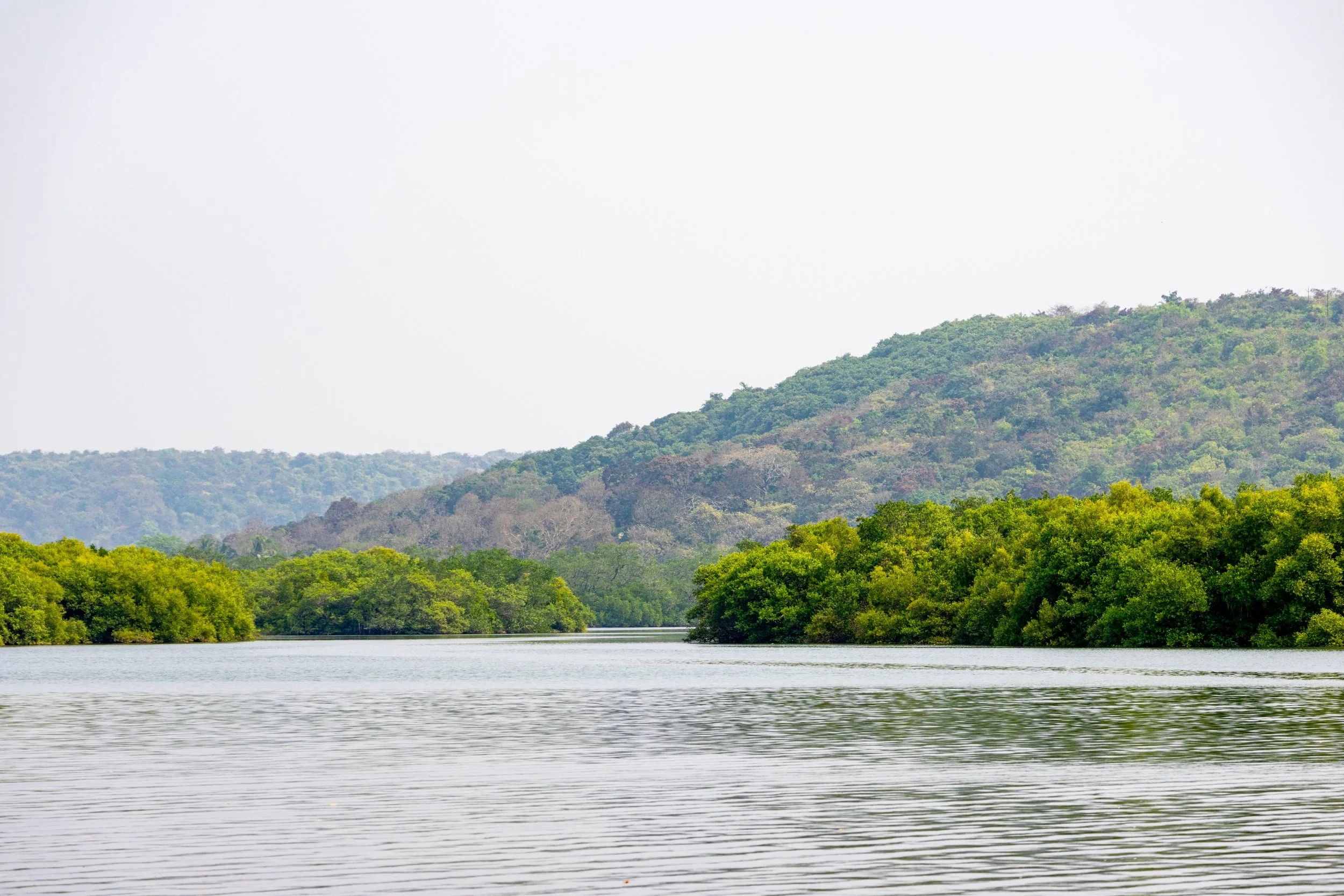
Keepers of the Konkan
From emergency snake rescues in coastal villages to nightly patrols for endangered sea turtles, community-led efforts are shaping how wildlife survives alongside rapid development.
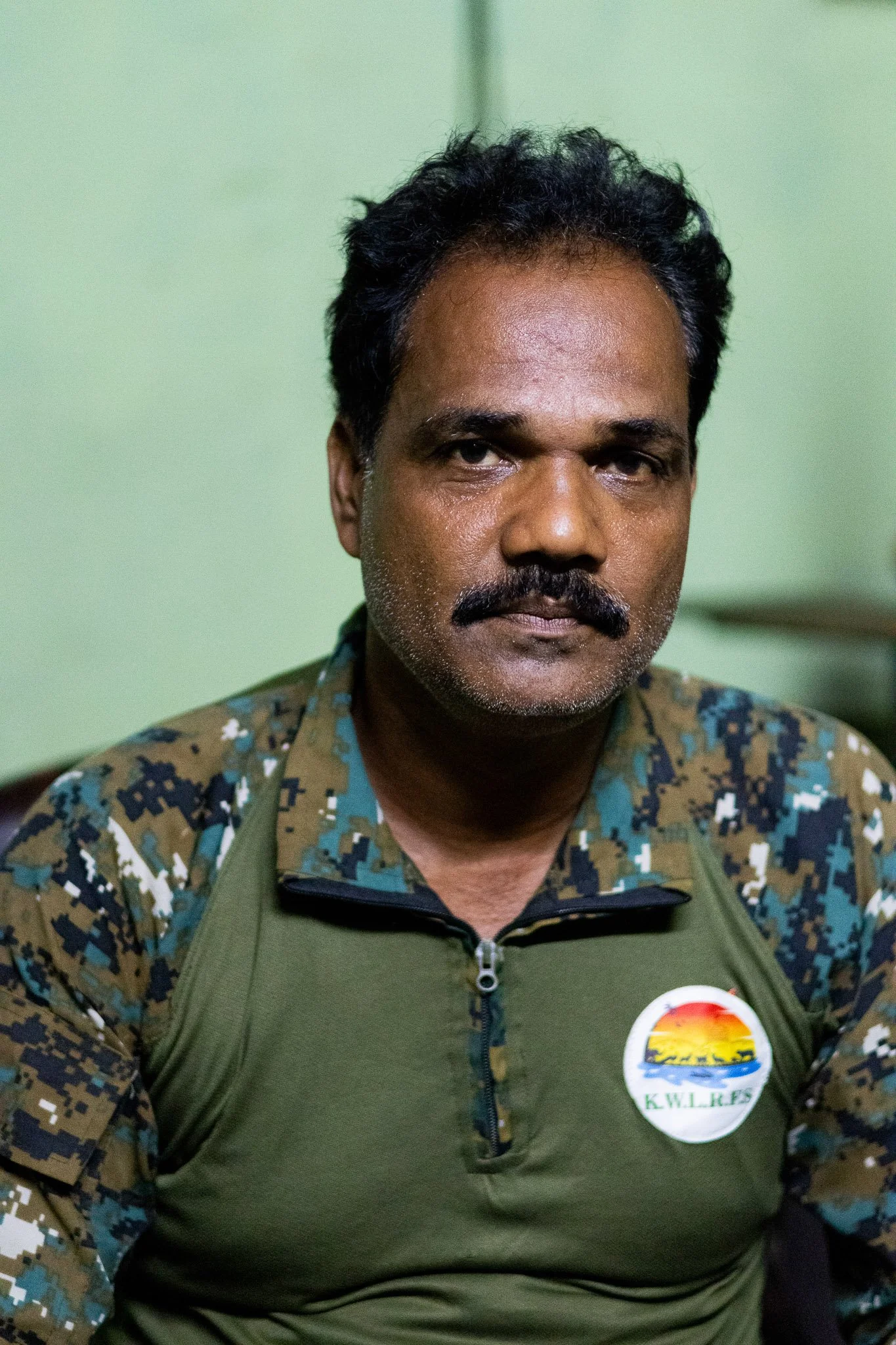
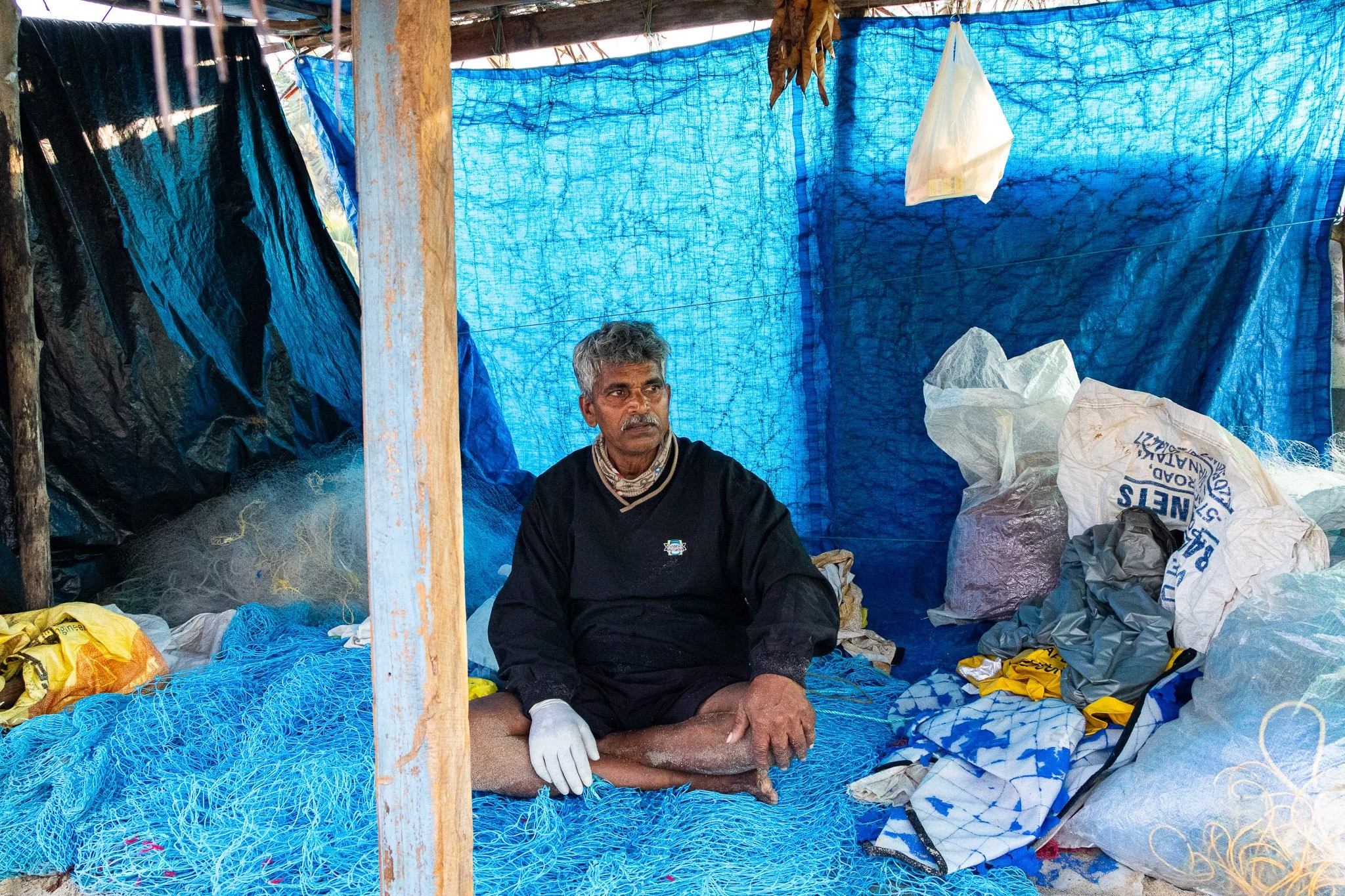
Anand.
Within the Sindhudurg district, many people live by a phrase that loosely translates to “let God decide,” a reflection of a mindset that encourages taking life one day at a time. For Anand and others, however, this idea carries a deeper meaning.
In the town of Malvan, a coastal town in Maharashtra's Sindhudurg district, Anand, a father, husband, construction and plantation worker by profession, believes that “nature is God,” and that much of the natural world is constantly at risk from human activity. In his eyes, rescuing animals is simply part of his duty. “I am doing God’s work,” he says, “acting as a bridge between animals and humans.”
Anand spends much of his free time responding to calls from across the Sindhudurg district to rescue injured or endangered wildlife. He has been doing this for nearly 40 years, beginning when he was just ten years old.
Harshal Patil, a marine researcher at the Dakshin Foundation says he has rarely seen anyone handle animals as confidently as Anand. The way he works appears almost harmonious with the animals themselves, yet his instincts are grounded in careful observation. Remarkably, Anand is entirely self-taught, having learned his methods by watching wildlife documentaries and observing how naturalists handle animals. With little specialised equipment, he carries out the rescues voluntarily, simply helping animals that have found themselves in places they do not belong.
Anand estimates he has rescued more than 10,000 animals — from monkeys and pangolins to jackals, leopards, crocodiles and snakes. On the Konkan coast he has even helped bury dolphins that washed ashore after dying at sea.
Anand records much of his work on his phone. At one point he shows me a video of a jackal he once rescued from a well, carefully lowering a rope before hoisting the stranded animal back to safety and releasing it into the surrounding forest.
Most calls, however, involve snakes. During peak periods, Anand says he can receive seven or eight calls in a single day, often involving species such as cobras and vipers.
During the interview, Anand’s phone suddenly rings. A snake has been spotted in a nearby village.
“let God decide,…”
Mangroves, Livelihoods and a Return Home
Stretching more than 700 kilometres along the Arabian Sea, the Konkan coastline is a region where fishing and farming have shaped daily life for generations. In Sindhudurg district, crops such as rice, coconut, kokum, mango and cashew remain central to local livelihoods.
The mangroves and coastal forests here support a wide range of species — from birds such as kites and eagles to fish, mammals including gaur and jackals, and the endangered olive ridley turtles. For many people living along this shoreline, protecting these ecosystems is simply part of everyday life.
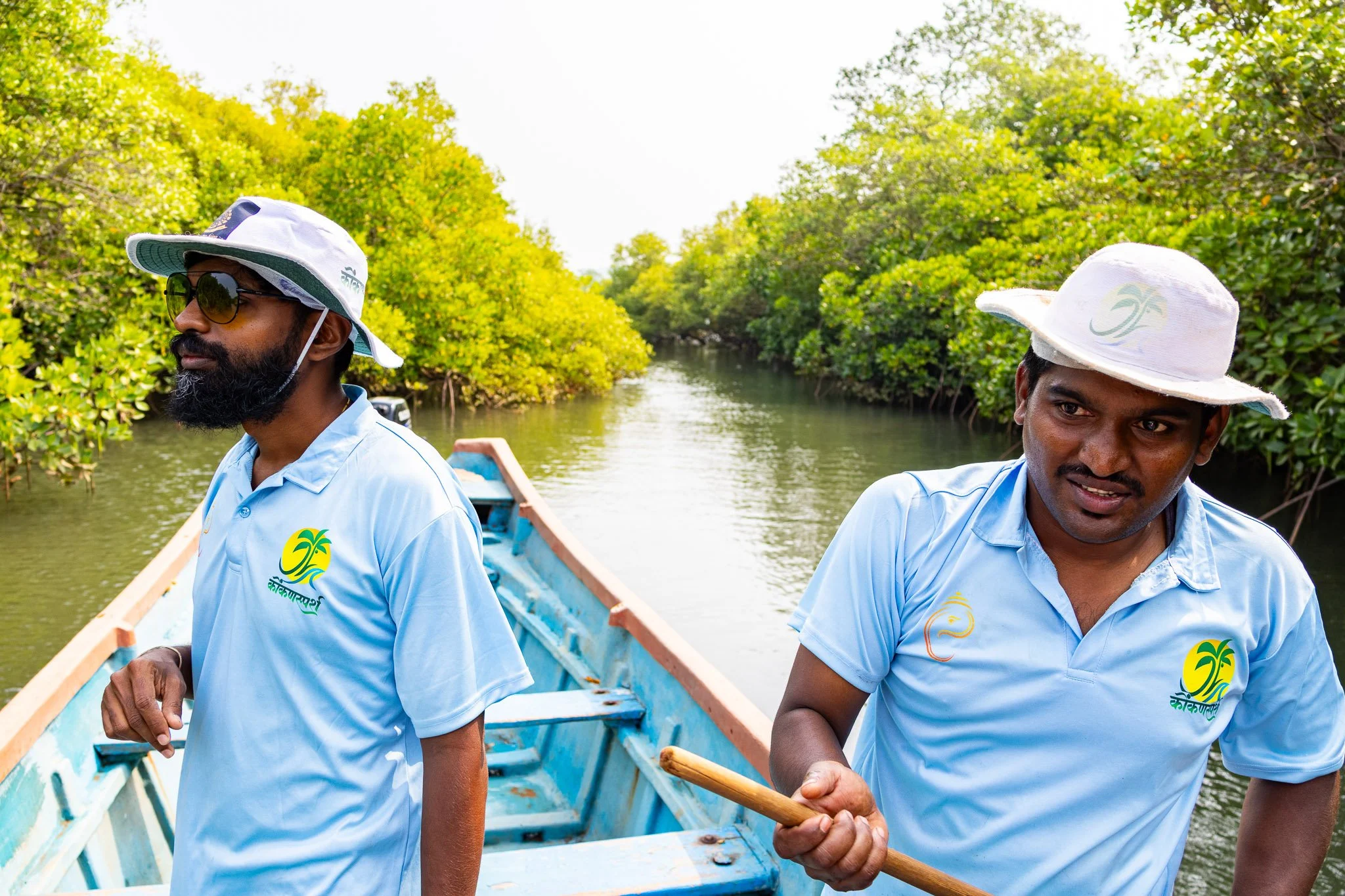
For Eknath Acharekar and his brother Omprakash, their efforts are run through KonkanSparsh, an eco-tourism initiative they founded in 2018 that offers guided mangrove tours and cultural experiences for visitors. Their aim, Eknath explains, is not only tourism but sustainability — creating opportunities for local people while encouraging visitors to understand the ecosystems that sustain the region.
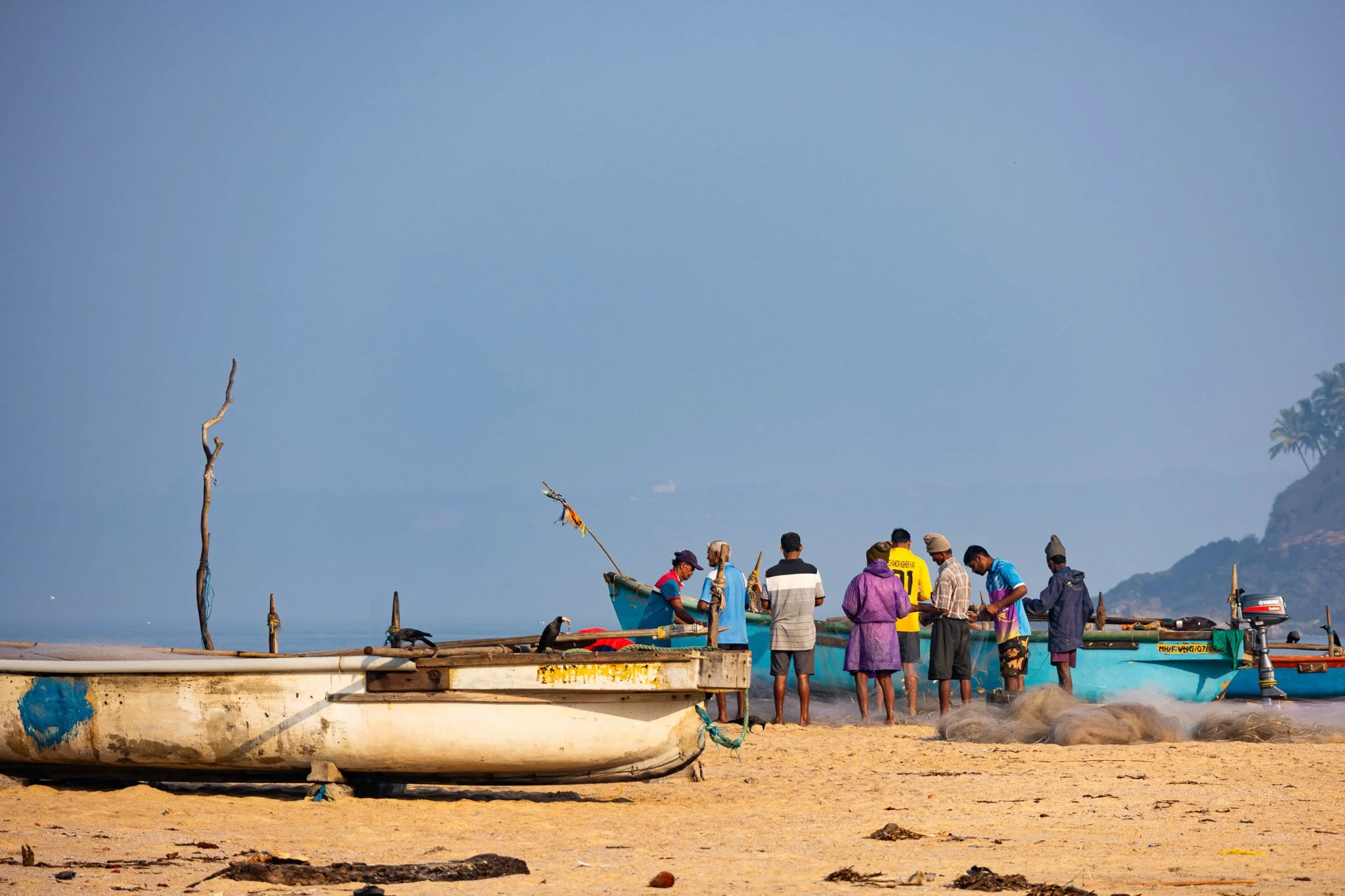
After spending 14 years working in information technology in India, the US and the UK, Eknath Acharekar returned to his hometown on India’s Konkan coast in search of something he felt was missing.
“I wanted to help,” Eknath says.
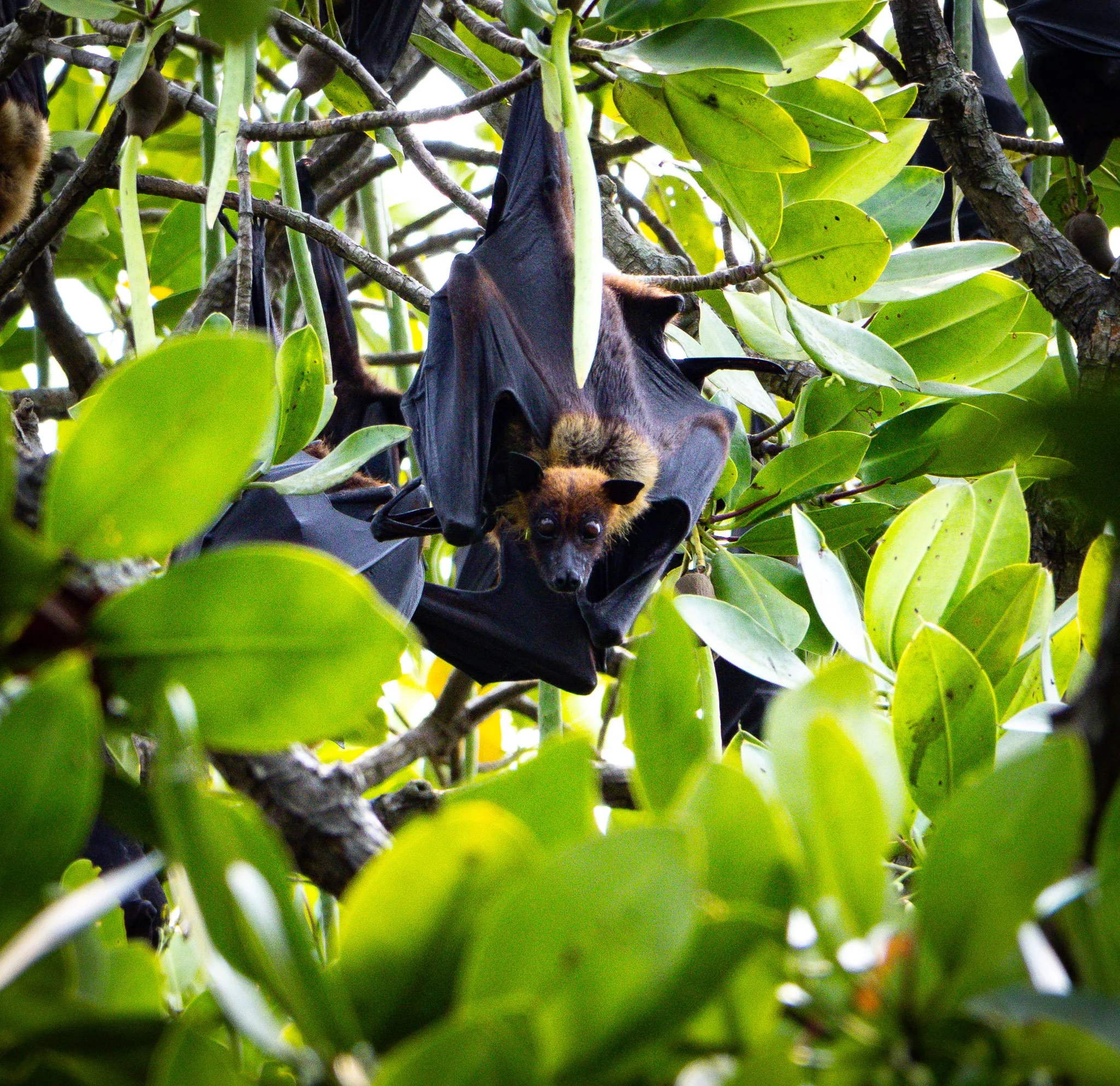
Like Anand, without formal training, the brothers taught themselves about the mangroves surrounding their village through exploration and reading. During a tour through the Achara mangroves, Eknath pauses to point out subtle movements between tangled roots — fish darting beneath the surface, crabs clinging to the mudbanks and high in the canopy above, colonies of fruit bats hanging motionless in the afternoon heat.
“These forests act as natural barriers against storms” Eknath explains, supporting the marine life local communities depend on, however, the relationship between people and the mangroves is not always harmonious. At one point, an explosion echoes across the creek as a fisherman throws a small homemade charge into the water to scare monkeys away from nearby crops. The blast sends the bats scattering into the air, prompting Eknath to shout in frustration as the boat drifts on.
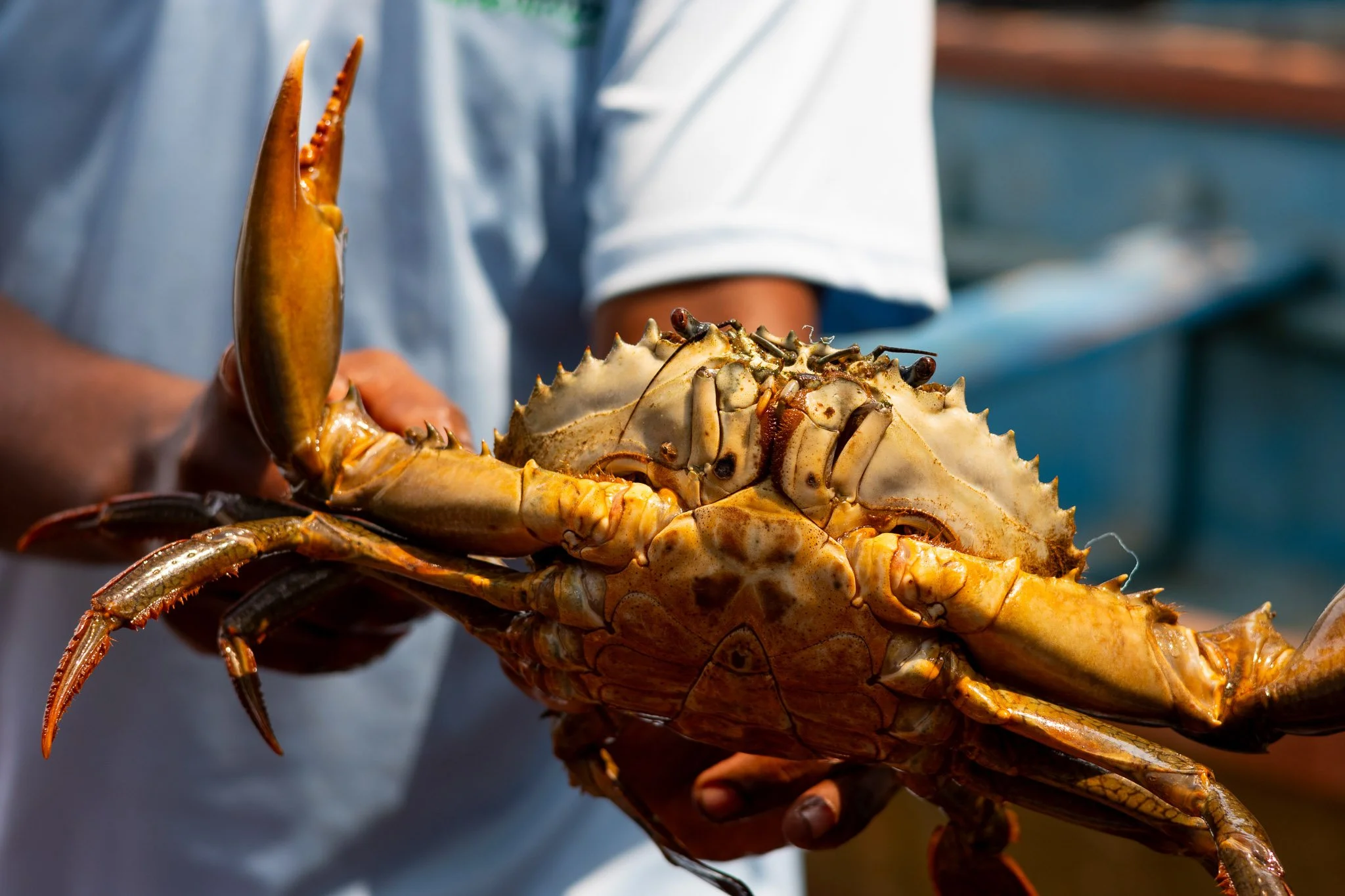
For the Acharekar brothers, the mangroves are more than scenery for visitors. They also farm mangrove crabs in small enclosures along the waterways, selling them at local markets. The additional income helps sustain their business while reinforcing the importance of protecting the ecosystem that makes it possible.
For Anand, his determination comes from the hardships animals face whilst operating in a world designed by humans.
After decades of responding to calls from across the district, rescuing wildlife has become second nature — not a job, but a responsibility he feels towards the animals that share the Konkan coast.
Answering the Call
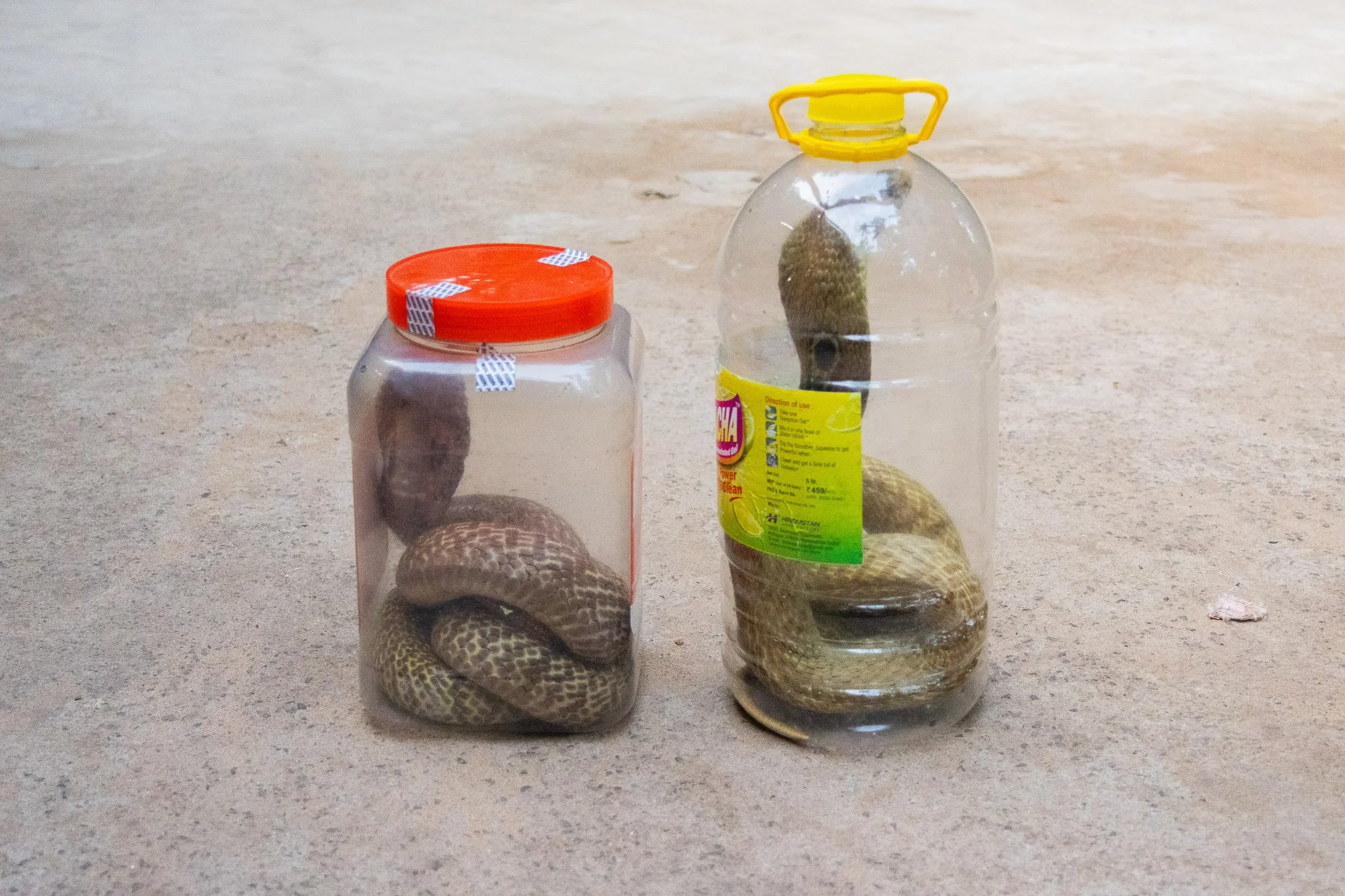
Anand grabs his camouflage uniform and allows me to take a few photographs before stepping out the door, carrying two plastic jars — each containing a cobra, their hoods raised and hissing sharply inside the containers.
Before we left, Anand spoke about the nature of snakes and what to do if someone is bitten. Most bites occur when snakes feel threatened, he explained, usually striking at legs or arms when people get too close. If bitten, the most important thing is to remain calm and avoid unnecessary movement, as increased activity can help the venom spread more quickly through the body.
While acknowledging the dangers, Anand says he has never had a serious accident in the 40 years he has been rescuing animals. In his view, humans pose a far greater threat to wildlife than wildlife does to us.
He then carefully transfers the cobras into a snake sack, places the bag in the footwell of his scooter and drives off to release them back into the wild.
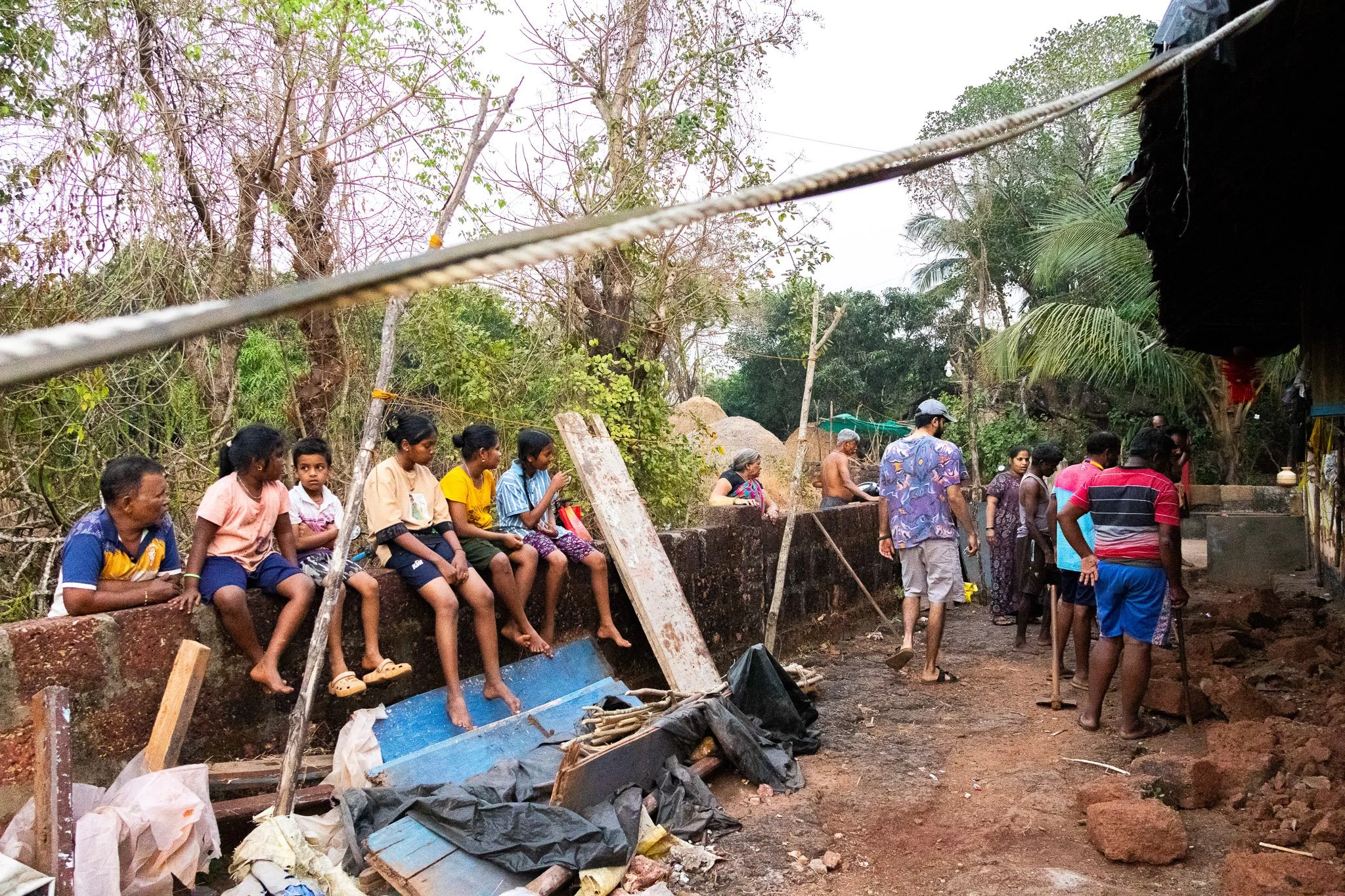
When we reached the caller’s home, Anand had been told that a cobra had slithered its way into a wall attached to the family’s house. Members of the community gathered around as Anand and a local man began breaking open the wall with hammers, hoping to ensure the safety of both the residents and the snake itself.
But when the bricks came loose, there was no sign of the cobra. After the wall had been knocked down, Anand used a hose to spray water into the rubble, hoping to flush the animal out. Still, nothing appeared.
Anand says the hardest part of the job is either locating the animal or figuring out how to rescue it safely. Once it is out in the open, the rest is straightforward.
Unfortunately, the cobra never appeared. As Anand continued searching through the rubble, his phone rang again — another call, this time about a Russell’s viper caught in some netting nearby. Like the cobra, the species is one of India’s “Big Four”, the venomous snakes responsible for most medically significant snakebite cases across India and Sri Lanka.
Anand set off again on his scooter, first releasing the two cobras he had rescued earlier back into the wild before heading home to collect a pair of scissors. The release was handled with remarkable care and confidence, a quiet demonstration of the experience he has built over decades working with animals.
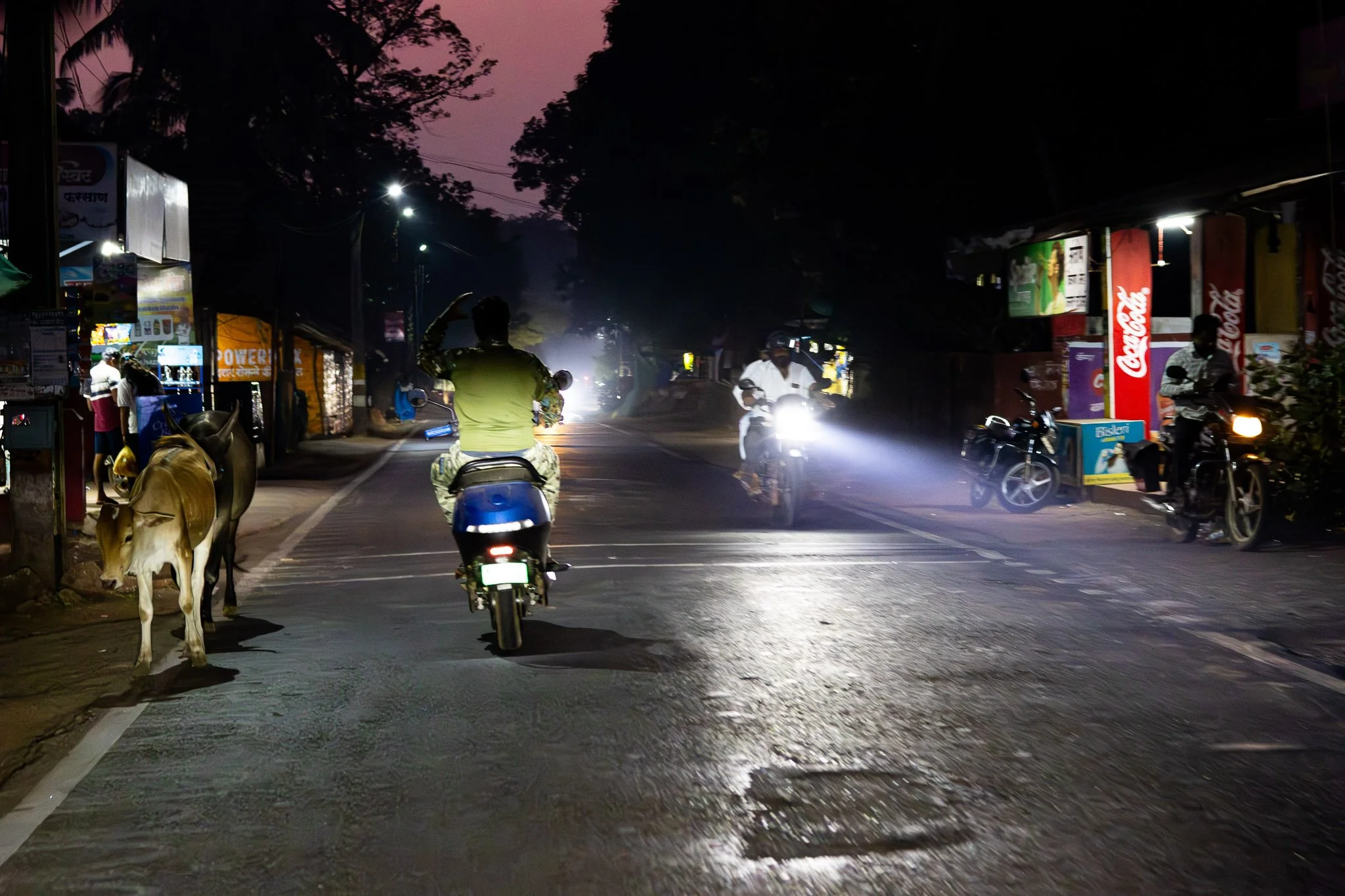
Moments later we were speeding through the streets of Malvan toward the next call. When we arrived, a shopkeeper handed us a work light that illuminated the Russell’s viper tangled in netting. Carefully, Anand used the scissors to cut the snake free before placing it safely into a plastic container.
Over the years, Anand has also assisted with turtle conservation along nearby beaches, helping volunteers protect nests and release hatchlings into the Arabian Sea.
Along this stretch of coastline, that sense of responsibility appears in many forms — from guiding visitors through mangrove forests to rescuing wildlife in village homes. And on the beaches beyond the town, volunteers continue their lives protecting nesting turtles.
Protecting the Next Generation
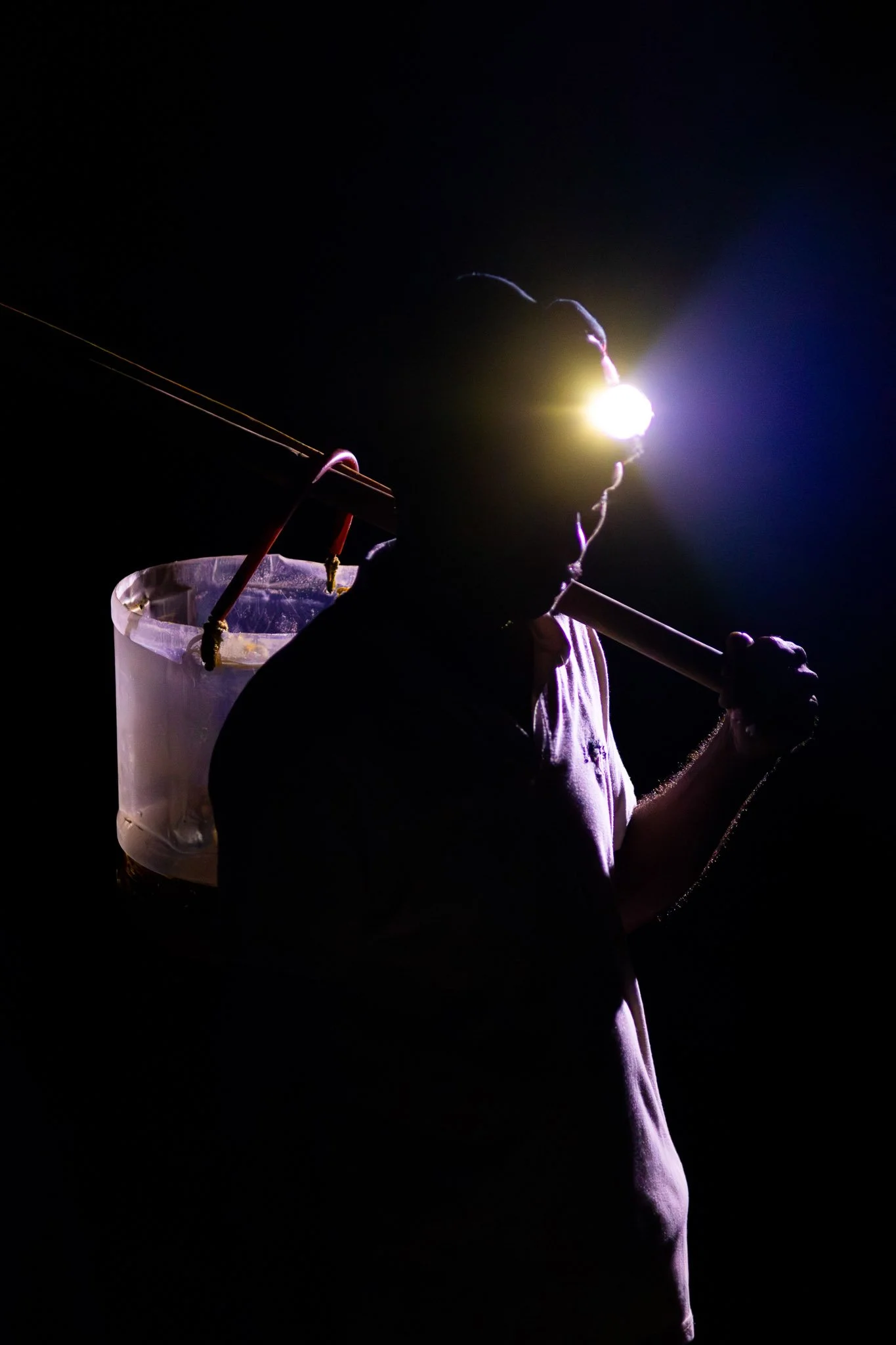
For nights on end along the dark beaches of Achara, 22 kilometres north of Malvan on India’s Konkan coast, Babu walks the shoreline searching for signs of nesting olive ridley turtles. Like other members of the kaasav mitra — “friends of the turtle” — he sweeps a head torch across the sand, its beam catching horned ghost crabs darting between the waves. Equipped with little more than a wooden stick, a bucket and a torch, the volunteers patrol the coastline long after sunset.
For Babu, the work began when he was just 11 years old. Watching a clutch of hatchlings emerge from the sand and scramble toward the Arabian Sea left a lasting impression.
“I knew this was what I wanted to do,” he says.
Four decades later, he still returns night after night, driven less by pay than by a quiet determination to protect the turtles that nest along this stretch of coast.
Over the years he estimates he has helped protect thousands of eggs along this coastline. For him, work is about more than income. It reflects a sense of responsibility to the wildlife that shares the Konkan.
But Babu is not alone.
Further south near Vengurla, the work of protecting olive ridley turtles continues.
Suhas first left the Konkan coast in 1984 to find work in Mumbai. But the routine never felt right. Even in the city, he says, his thoughts returned to the beaches where he had watched turtles nest as a child.
Eventually he came back.
Today he works alongside the Forest Department protecting nests scattered along the shoreline. His dedication has shaped the rhythm of his life. Most evenings end with another walk along the beach, scanning the sand for tracks.
Although his family home stands just behind the hatcheries, Suhas often sleeps in a small shelter he built himself from wood and tarpaulin, keeping watch through the night.
Years of observation have given him an intimate understanding of the turtles’ behaviour — knowledge gained not from textbooks but from time spent listening to the tide and watching hatchlings emerge from the sand.
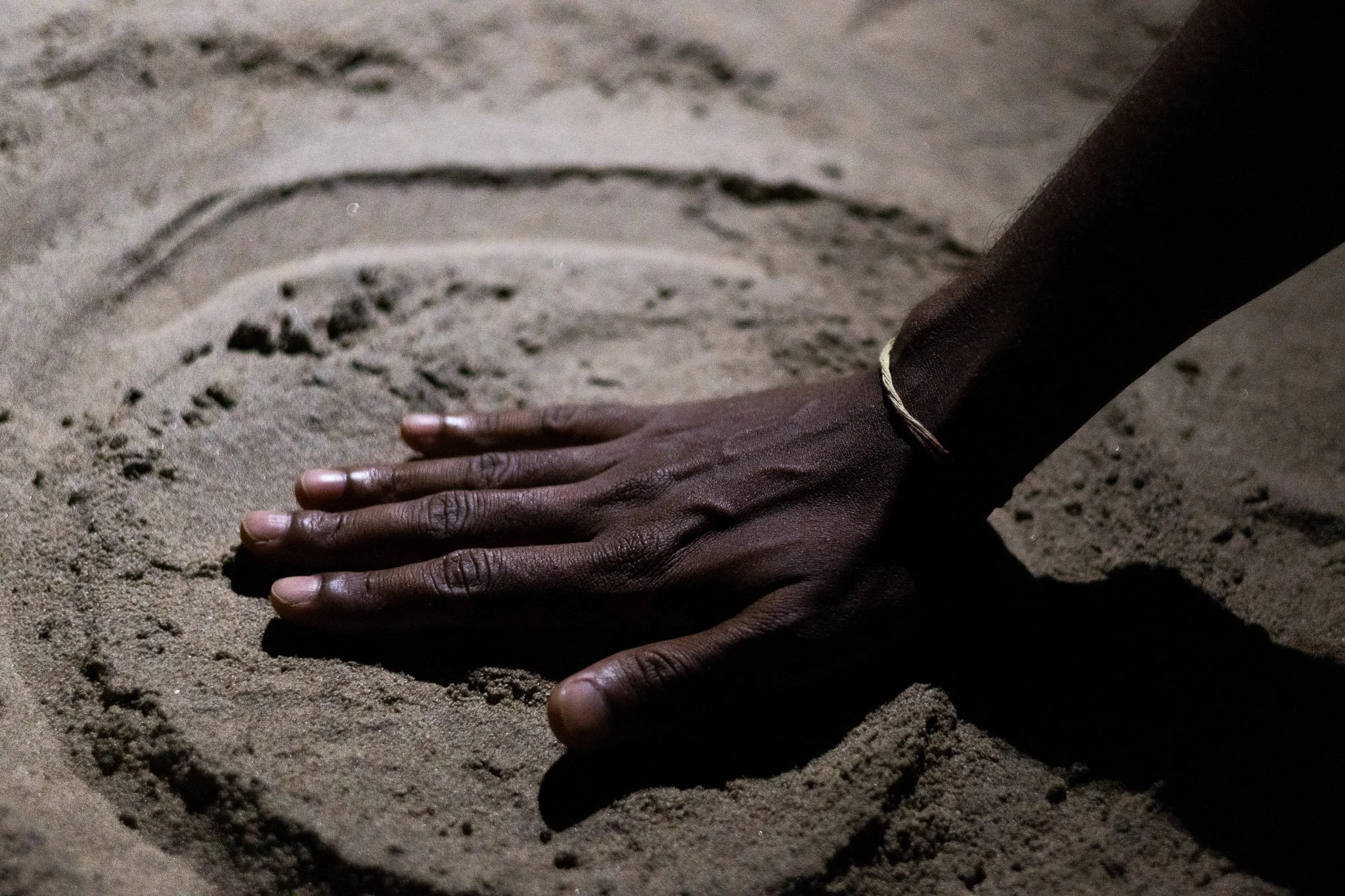
As the tiny turtles break through the surface, he crouches beside the nest counting them one by one before guiding them toward the sea.
A single nest can contain more than a hundred eggs. Not all survive. Experience has taught him that even small differences in nest depth or temperature can determine whether hatchlings live or die.
While he insists tourism is not his motivation, hatcheries along the Konkan coast now attract visitors from across India. Greater awareness, he believes, helps sustain conservation efforts that rely heavily on local commitment.
Some younger residents continue to leave coastal villages in search of stable work. Others are choosing to stay. Suhas’ nephew now helps monitor nests, learning the same rhythms passed down through experience.
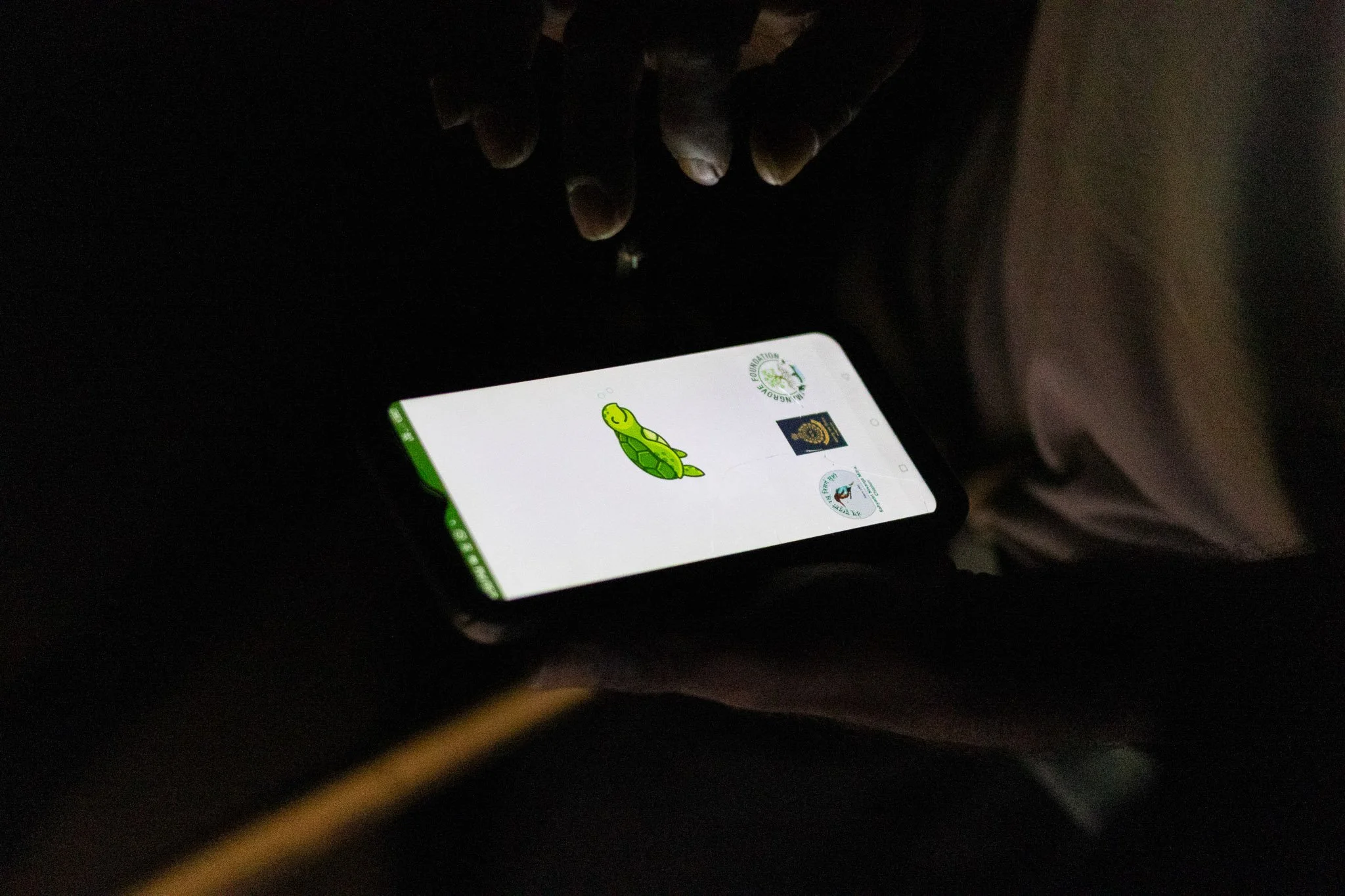
Each season brings new uncertainties — and occasional surprises. On his phone he shows a photograph of two hatchlings he believes emerged from the same nest, one resembling an olive ridley, the other closer to a green turtle.
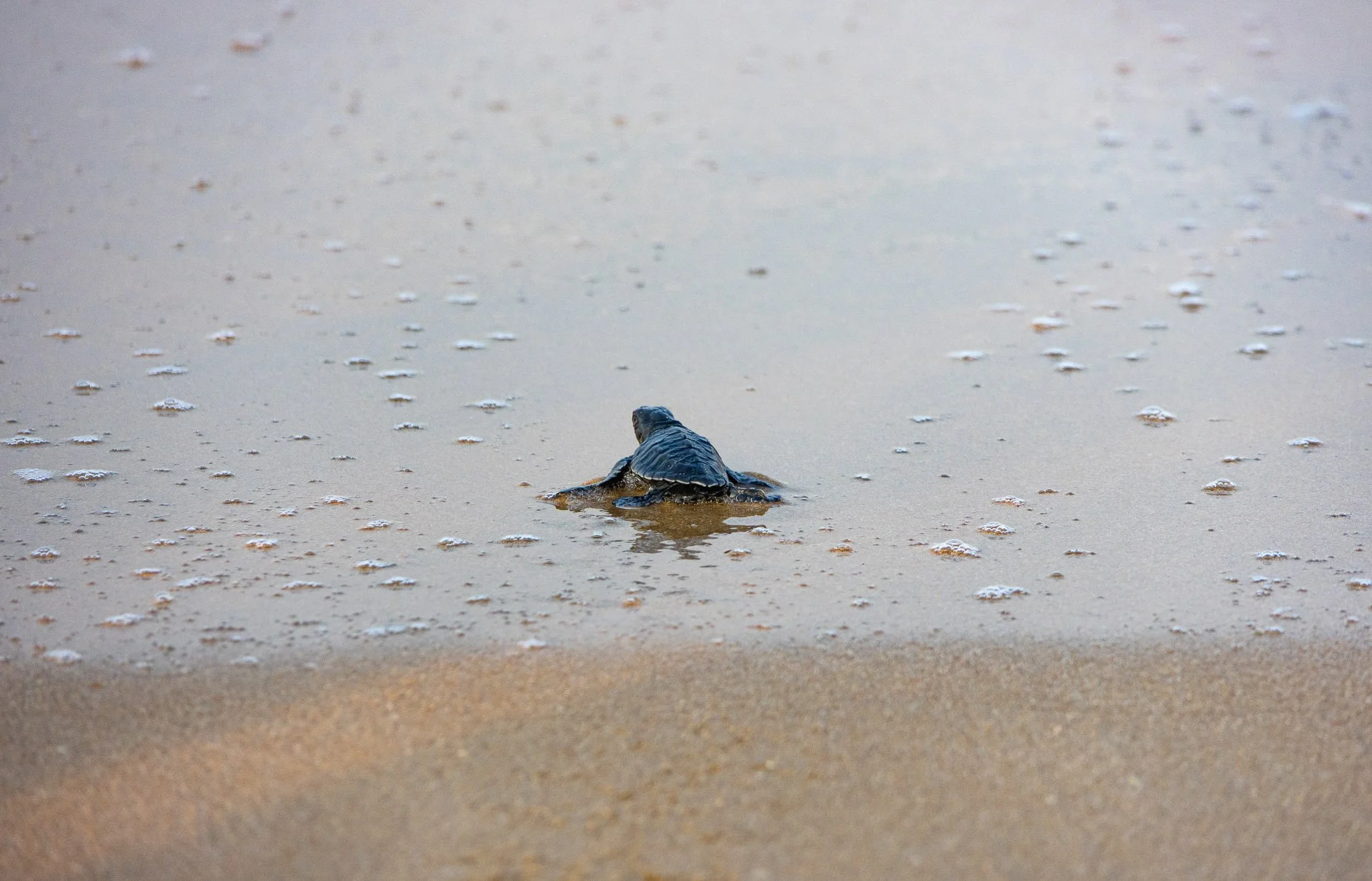
For Suhas, the purpose remains simple: to give each new generation the best chance of reaching the sea.
As the last hatchlings disappear into the dark surf, torchlight fades across the sand.